HVAC gauges are one of the first diagnostic tools most technicians learn to use. While they measure system pressure, experienced technicians know that pressure is only part of the story.
Gauge readings help indicate what is happening inside a refrigeration or air conditioning system, but those readings always need to be interpreted in context. Temperature, refrigerant type and operating conditions all influence what the gauges are telling you, and a firm knowledge of the basics helps apprentices develop good diagnostic habits from the start.
What HVAC gauges are used for
HVAC gauges are designed to measure the pressure within a refrigeration or air conditioning system.
Technicians use them during:
- System installation
- Commissioning
- Routine servicing
- Fault finding
- Performance checks
Pressure readings provide valuable information about how the system is operating and can help identify issues before more extensive testing is required.
What you see on an HVAC gauge
Most manifold gauges display pressure using PSI, kPa or both.
They also include refrigerant scales that allow technicians to relate pressure to the corresponding saturation temperature for different refrigerants.
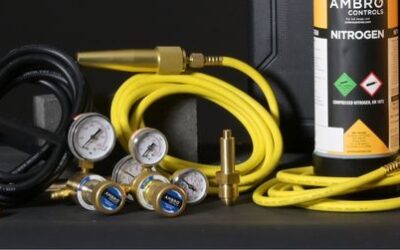
A typical gauge set includes:
- A low-side (blue) gauge
- A high-side (red) gauge
- Service hoses for connecting to the system
Many HVAC technicians now use digital manifolds, which display pressure electronically and often calculate saturation temperatures automatically. Whether using analogue gauges or digital manifolds, the principles of interpreting system pressure remain the same. Although the gauges display pressure, technicians often use those readings to understand the temperatures occurring within the refrigeration circuit.
High side vs low side
The low side of the system measures suction pressure returning to the compressor. The high side measures discharge pressure and can also be used to assess liquid pressure within the system.
Each side provides different information about system operation, and both are considered together when diagnosing performance issues.
PRO TIP
Experienced technicians often think in temperatures rather than pressures. Pressure is simply the value that tells you the refrigerant’s saturation temperature at that point in the system. Once you grasp that relationship, gauge readings become much more meaningful.
Interpreting gauge readings
Accurate gauge readings help technicians make better decisions during installation and servicing.
Reliable readings can help:
- Identify system faults
- Support correct charging procedures
- Confirm operating performance
- Reduce unnecessary troubleshooting
Looking at pressure alone rarely tells the whole story. Readings should always be considered along with system temperatures and operating conditions.
Common mistakes when reading HVAC gauges
Learning to interpret gauges takes practice, and there are many mistakes newer technicians can make, including:
- Confusing the high and low side gauges
- Interpreting pressure without considering refrigerant type
- Taking readings before the system has stabilized
- Overlooking temperature when interpreting pressure
- Not accounting for refrigerant glide when working with blended refrigerants
Small mistakes in interpretation can lead to unnecessary repairs or incorrect system adjustments.
Factors that affect gauge readings
Gauge readings change as system conditions change.
Some of the biggest influences include:
- Ambient temperature
- System load
- Refrigerant type
- Operating conditions
- Non-condensable gases within the system
A clear understanding of these factors helps technicians interpret readings rather than relying on the pressure value alone.
Reliable equipment, reliable readings
Accurate diagnosis starts with accurate information. Reliable gauges, quality hoses and well-maintained equipment help technicians obtain consistent pressure readings that support better troubleshooting and servicing decisions. Regular inspection and calibration also help ensure equipment continues to perform as expected over time.
Things to remember
HVAC gauges provide valuable insight into how a system is operating, but pressure readings are only one part of the picture.
Recognizing the relationship between pressure and temperature, considering operating conditions and using reliable equipment all help technicians diagnose systems more accurately and build confidence as their experience grows.
Reading an HVAC/R system accurately takes experience. The more technicians learn to interpret pressure alongside temperature and operating conditions, the more confident they become when diagnosing system performance.