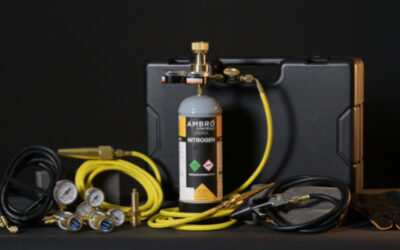
Nitrogen is one of those things HVAC techs use for a lot of very different jobs. You might be flowing it while brazing, using it to clear a condensate drain line, or pressure testing a system for leaks. Same gas. Very different job.
The difference comes down to how the nitrogen needs to be delivered. Sometimes you need a low, controlled flow. Sometimes you need a short burst. Sometimes you need regulated pressure.
Flow: using nitrogen while brazing
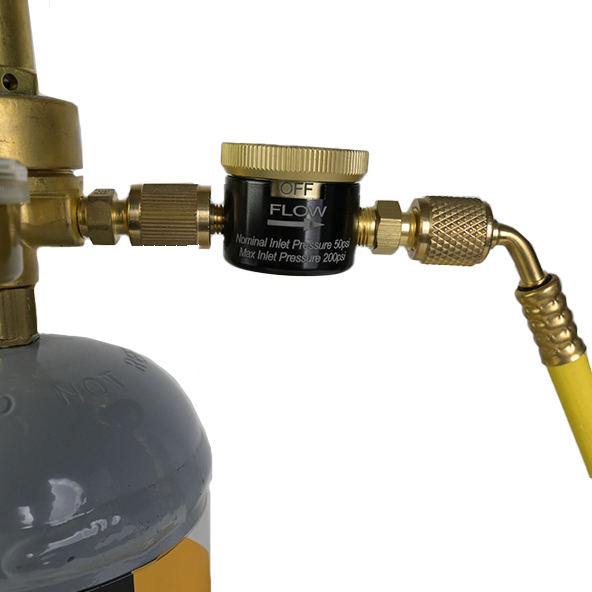
When copper piping is heated during brazing, oxygen inside the pipe can react with the hot copper and form oxide scale. That scale can break away once the system is running and circulate through the system, where it may contribute to restrictions or damage to components. Flowing nitrogen through the piping while brazing helps displace oxygen and reduce the formation of internal oxides. The key isn’t just getting nitrogen into the pipe. It’s controlling how much is moving through it.
Before brazing, nitrogen is used to purge air from the piping. Once that initial purge is complete, the flow is reduced while the joint is brazed. At that point, you only need enough nitrogen moving through the pipe to maintain the nitrogen atmosphere inside it.
A dedicated flow regulator makes that process much easier. The Ambro Controls Nitrogen Flow Regulator has separate PURGE and BRAZE settings, so technicians can establish the initial flow, then switch to a lower preset flow for brazing. It also helps avoid burning through more nitrogen than the job needs.
Flush: clearing condensate drain lines
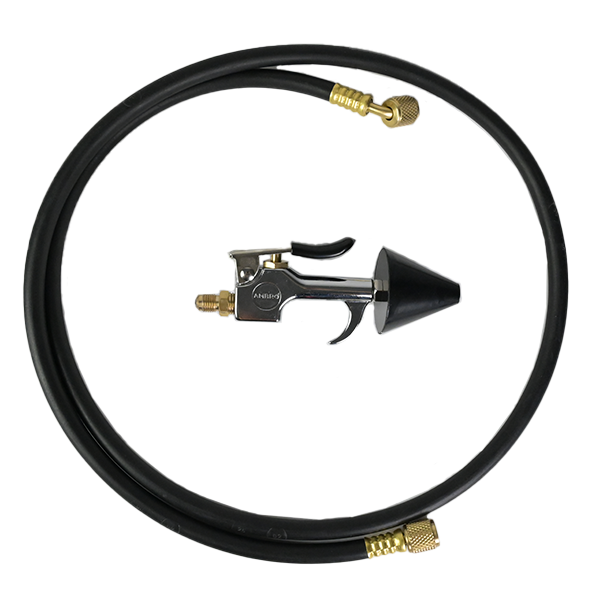
The same nitrogen setup can also be used for another common job: clearing and flushing condensate drain lines. This time, you’re not trying to maintain the low, steady flow needed for brazing. You need controlled nitrogen delivery that can be directed through the drain line when required. That’s where the blowout gun comes in.
Used with a regulated nitrogen supply, the gun gives the technician control over when nitrogen is released, helping clear blockages and flush the line. The Ambro Nitrogen Blowout Gun is designed for condensate drain lines and similar low-pressure piping, with trigger-controlled delivery and a universal rubber cone for common drain-line sizes. The cylinder should always be used through the appropriate regulator rather than connected directly to the blowout tool.
Test: pressure testing with nitrogen
Pressure testing changes things again. Unlike brazing, where nitrogen needs to keep moving through the piping, pressure testing involves introducing nitrogen into a closed system and bringing it up to the specified test pressure. From there, the technician can monitor whether the pressure holds and investigate potential leaks.
The required pressure depends on the system and equipment being tested, so manufacturer specifications and the correct test procedure should always be followed.
This is the job of the nitrogen regulator: controlling the pressure being supplied from the cylinder to the system. Ambro Controls offers different regulator capacities for different applications, including 400 PSI and 870 PSI options.
One gas. Three different jobs.
Flowing nitrogen while brazing, clearing a drain line and pressure testing all use nitrogen, but they don’t use it in the same way. That’s an important distinction.
For brazing, you need controlled flow. For drain-line flushing, you need controlled bursts. For pressure testing, you need regulated pressure.
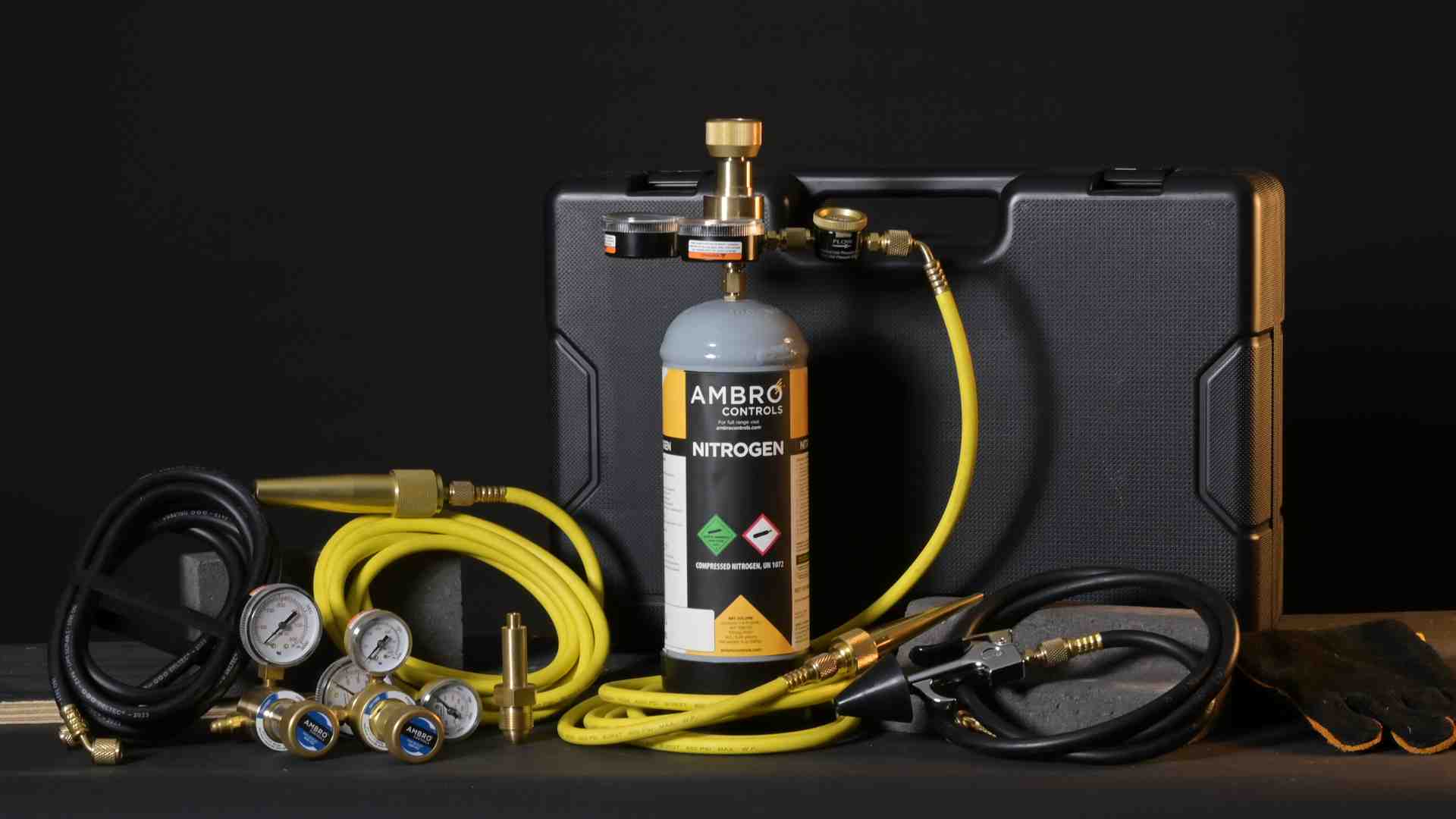
Ambro Controls Nitrogen Purge Kits bring those functions together in one portable setup. Current kits include a Nitrogen Flow Regulator, Nitrogen Blowout Gun and Extended Refillable Cylinder Adaptor as standard, alongside the nitrogen regulator and other kit components. The kits can be used with the compact Ambro Controls 1.9L disposable Nitrogen Cylinder or connected to standard refillable cylinders with a CGA580 connection using the included adaptor.
So, with the right kit for the application, technicians can cover three common nitrogen jobs: Flow. Flush. Test.