Brazing is a fundamental HVAC/R skill, but even experienced technicians can run into problems from time to time.
A small mistake during brazing can lead to:
- leaks
- weak joints
- system contamination
- unnecessary callbacks
- time spent reworking a repair
Most of these issues aren’t caused by a lack of experience. They usually come down to heat control, preparation, flame setup or process discipline.
Here are five common brazing mistakes technicians still encounter in the field and what can be done to avoid them.
Mistake #1: Poor heat control
Heat control sits at the center of almost every successful brazed joint.
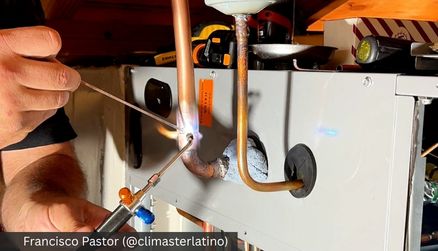
Applying too much heat, too little heat or heating the joint unevenly can affect filler flow and joint quality. A poorly adjusted brazing torch can make this even more difficult by creating an unstable flame or concentrating heat in the wrong area.
Common results include:
- overheated copper
- cold joints
- poor filler penetration
- damage to nearby components
- holes burnt into copper tubing
Many technicians have experienced a situation where adding more heat seemed like the solution, only to create additional problems.
How to avoid it
- Apply heat evenly across the fitting and pipe
- Allow the joint to reach temperature gradually
- Maintain stable flame control throughout the process
- Let the joint draw the filler metal naturally
FIELD NOTE
If filler metal is not flowing properly, more heat is not always the answer. Uneven heating, poor fit-up, oxidation, or flame issues can produce similar symptoms.
Mistake #2: Inadequate joint preparation
Even the best brazing torch can’t compensate for a poorly prepared joint. Dirty surfaces, oxidation, oils, debris or poor alignment can prevent filler metal from flowing correctly through the connection.
This can result in:
- weak joints
- leaks
- poor capillary action
- contamination entering the system
How to avoid it
- Clean joint surfaces before brazing
- Remove contamination from the pipe and fitting
- Check alignment before heating
- Ensure proper fit-up between components
Good brazing starts before the torch is ever lit.
Mistake #3: Skipping nitrogen purging
Nitrogen purging has become standard practice across much of the HVAC/R industry for good reason. Without nitrogen flowing through the line during brazing, oxidation can form inside the pipework. This oxidation is often referred to as black scale.
Once the system is operating, that contamination can travel through the refrigeration circuit and contribute to:
- plugged filter driers
- blocked capillary tubes
- restricted TEV screens
- reduced system performance
How to avoid it
Use a controlled nitrogen purge while brazing to help maintain internal cleanliness and reduce oxidation inside the pipe.
Mistake #4: Using the wrong filler metal
Not every brazing rod is suitable for every application. Different base metals require different filler materials to produce a strong, reliable joint. A filler metal that works well on copper may not perform properly when joining brass or steel.
HVAC/R systems experience:
- pressure changes
- vibration
- repeated heating and cooling cycles
If the wrong filler metal is used, the joint may not bond correctly and can develop leaks, cracks or premature failures over time.
How to avoid it
- Understand which metals are being joined
- Select a filler metal designed for that application
- Confirm compatibility before starting work
Using the correct filler metal often improves flow characteristics, joint quality and long-term reliability.
Mistake #5: Poor flame setup
Flame setup affects heat control, filler flow, and overall brazing consistency. An unstable flame, incorrect gas mix, or poorly adjusted torch can make it difficult to heat the joint evenly and maintain control throughout the brazing process.
Problems caused by poor flame setup often look very similar to poor heat control, including:
- overheated copper
- poor filler flow
- oxidation
- weak joints
How to avoid it
- Set up the torch correctly before starting work
- Use a stable flame suitable for brazing
- Monitor flame behavior throughout the job
- Make adjustments as conditions change
Small flame adjustments can have a noticeable impact on joint quality.
The cost of common brazing mistakes
Most brazing mistakes don’t become obvious immediately. Many only reveal themselves later during pressure testing, commissioning, system operation and warranty work.
The result can be callbacks, refrigerant leaks, wasted materials, lost time and reduced system reliability.
Avoiding these issues usually comes back to the fundamentals: preparation, heat control, flame control, nitrogen use and correct material selection.
Equipment, control and consistency
Reliable tools help technicians maintain consistency from one joint to the next.
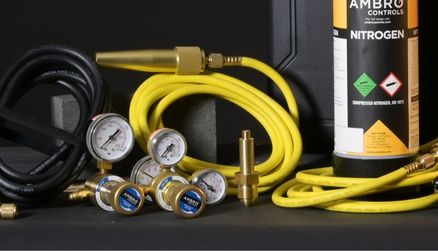
Stable gas delivery, dependable regulators, quality filler metals and predictable brazing torch performance all contribute to better control during brazing work.
While equipment alone won’t prevent mistakes, it can make it easier to maintain the consistency needed for strong, reliable joints.
Things to remember
Most brazing problems come back to a handful of common causes:
- poor heat control
- inadequate joint preparation
- skipping nitrogen purging
- incorrect filler metal selection
- poor flame setup
Paying attention to these fundamentals helps produce stronger joints, reduce rework and improve long-term system reliability.