Copper reacts to heat differently from many other metals used in HVAC/R work. It heats quickly, spreads heat rapidly through the joint and can lose strength if too much heat is applied during brazing.
Anyone who has spent time brazing copper knows that temperature control matters when working with copper lines.
Understanding the melting temperature of copper helps technicians manage heat more effectively, improve filler flow and reduce problems such as oxidation, weak joints, or unnecessary rework.
What is the melting temperature of copper?
Copper melts at approximately:
- 1985°F
- 1085°C
That temperature is much higher than the temperatures normally used when brazing (between 1200°F and 1550°F). During brazing, the goal is not to melt the copper itself. Instead, techs heat the base metal enough for the filler metal to melt and flow into the joint.
Different brazing rods flow at different temperatures depending on the alloy being used. Some require less heat, while others require more, but the principle remains the same: the copper pipe itself should remain solid throughout the process.
Understanding that difference helps technicians apply enough heat to achieve good filler flow without overheating the joint.
What technicians are trying to avoid
If copper is overheated during brazing, technicians can run into problems such as:
- oxidation
- weakened copper
- poor filler flow
- distortion around the joint
- unnecessary heat stress on nearby components
Brazing temperature vs copper melting temperature
Brazing works because the filler metal melts before the copper does. That allows the filler alloy to flow through the joint via capillary action while the copper pipe and fitting remain structurally intact.
Staying within the correct temperature range is important because insufficient heat can prevent proper filler flow and excessive heat can damage the copper or surrounding components
The objective is controlled and even heating across the joint rather than applying maximum heat as quickly as possible.
How copper handles heat
Copper has very high thermal conductivity, which means heat spreads rapidly through the material. Anyone who has brazed larger pipe sizes or fittings has seen this happen. Copper quickly pulls heat away from the joint area.
That affects how long the joint takes to heat, where the flame is applied and also, how evenly temperature builds across the fitting and pipe.
Heating the joint correctly
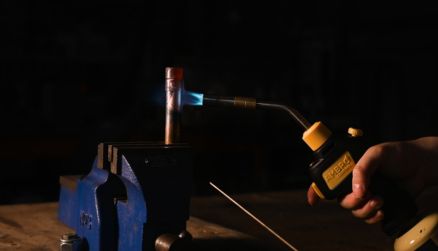
Rather than concentrating heat directly on one point, technicians usually work the flame around the fitting and pipe to build temperature evenly across the joint. This helps to reduce overheating, improve filler flow, support smoother capillary action and avoid localized hot spots.
FIELD NOTE
If you’re finding that filler metal is not flowing properly, adding more heat immediately might not be the answer. Uneven heating, oxidation, poor fit-up or incorrect flame control can all affect how the alloy moves through the joint.
Filler metal flow and capillary action
Brazing filler metal flows when the copper joint reaches the right temperature. When the joint temperature is right, the molten filler is drawn into the connection through capillary action.
If the copper is too cold:
- the filler might ball up or sit on the surface
- flow might become uneven
- penetration might be incomplete
If the copper becomes overheated:
- oxidation increases
- filler flow can become unstable
- the joint can weaken
- nearby components can be exposed to unnecessary heat
Consistent heat control helps create smoother filler distribution and more reliable joints.
Common brazing problems caused by poor heat control
Most brazing issues come back to uneven temperature management somewhere during the process.
Overheating the copper
Excessive heat can:
- oxidize the copper
- weaken the material
- damage nearby valves or components
- create brittle or inconsistent joints
Poor filler flow
When the joint temperature is inconsistent, filler metal might not distribute evenly through the connection. This can lead to voids in the joint, incomplete penetration, small leak paths or weak sections under pressure.
Oxidation inside the pipe
Excessive heat without proper nitrogen purging increases oxidation inside copper lines. That contamination may later circulate through the refrigeration system and contribute to blocked strainers, valve issues, reduced efficiency or compressor wear over time.
Temperature control improves efficiency on-site
Good heat control does more than improve joint quality. It also helps reduce:
- rework
- wasted filler metal
- unnecessary overheating
- installation time spent correcting poor joints
Consistent brazing technique generally produces:
- cleaner joints
- more reliable results
- fewer leaks during pressure testing
- less time spent repairing avoidable issues
Flame control and adjustable heat output
Because copper distributes heat so quickly, techs rely heavily on flame control when brazing. Stable gas delivery and adjustable heat output help to maintain even joint temperature, avoid overheating smaller fittings, control heat around sensitive components and manage larger copper connections more effectively.
This becomes especially important when working in tighter spaces or around valves and temperature-sensitive components.
Things to remember
Copper melts at approximately 1985°F, but brazing temperatures should stay well below that point.
The goal during brazing is to:
- heat the copper evenly
- melt the filler metal
- maintain smooth capillary flow
- avoid overheating the joint
For techs, understanding how copper responds to heat leads to stronger joints, less oxidation and fewer issues on-site.