Nitrogen plays an important role in HVAC/R installation, servicing and repair work. Technicians use nitrogen for two primary tasks: purging during brazing and leak testing before commissioning. While both involve the use of nitrogen gas, they serve different purposes and require different approaches.
Understanding the difference between flow and pressure helps technicians use nitrogen more effectively while protecting system cleanliness and integrity.
Why nitrogen is used in HVAC systems
Nitrogen is widely used in HVAC/R applications because it is dry and inert. Unlike compressed air, nitrogen does not introduce moisture into the system. It also does not support oxidation inside refrigeration piping during brazing.
These characteristics make nitrogen useful for maintaining system cleanliness throughout installation and service work.
Common HVAC/R uses for nitrogen include:
- Purging during brazing
- Leak testing
- Pressure holding tests
- Helping maintain system cleanliness
For many technicians, nitrogen becomes a routine part of producing reliable, long-lasting systems.
What is nitrogen purging?
Nitrogen purging involves flowing nitrogen through piping while brazing is being performed. The goal is to reduce oxidation inside the tubing as heat is applied. Without nitrogen, oxidation can form on internal pipe surfaces. This contamination is often referred to as black scale and can circulate through the system once it is commissioned.
Over time, contamination can contribute to:
- Blocked filter-driers
- Restricted TXV screens
- Capillary tube restrictions
- Reduced system performance
Nitrogen purging helps minimize these risks and is considered best practice across much of the HVAC/R industry.
PRO TIP
When purging with nitrogen, the system needs a path for the gas to escape. Nitrogen is flowing through the piping, not being trapped inside it. Without an outlet, pressure can build within the system.
What is nitrogen leak testing?
Leak testing uses nitrogen differently. Instead of flowing continuously through the piping, nitrogen is used to pressurize the system so technicians can assess its integrity. If pressure cannot be maintained, further investigation may be required to identify leaks before the system is commissioned.
Nitrogen provides a controlled and predictable way to test refrigeration piping without introducing moisture into the system. For many technicians, leak testing is one of the final opportunities to identify issues before refrigerant is introduced.
Understanding flow and outlet pressure
One of the most important distinctions when working with nitrogen is understanding the difference between flow and pressure.
During purging, the focus is on maintaining a controlled flow of nitrogen through the system.
During leak testing, the focus shifts to controlled pressure within the system.
Although the same nitrogen cylinder may be used for both tasks, the way nitrogen is delivered differs significantly. Understanding that difference helps technicians avoid common mistakes and achieve the intended result from each process.
Equipment used with nitrogen
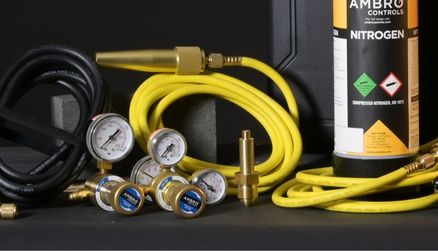
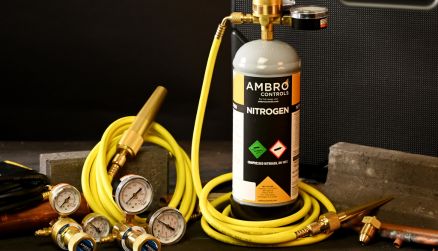
Most HVAC/R technicians rely on a small group of components when working with nitrogen.
These typically include:
- A nitrogen tank or cylinder
- A nitrogen regulator
- Hoses
- Fittings and connectors
A nitrogen regulator allows technicians to control outlet pressure and manage how nitrogen is delivered for different HVAC/R applications.
Each component plays a role in controlling how nitrogen gas is delivered to the system. The nitrogen regulator is particularly important because it allows technicians to manage flow or pressure as required by the task being performed.
Reliable equipment also makes it easier to work consistently across different installations and service calls.
Common mistakes to avoid
Several issues appear regularly when nitrogen-related problems occur.
Applying too much flow during purging
Excessive flow is not necessary for effective purging and can create unnecessary complications.
Using incorrect pressure during leak testing
Pressure control is a key part of effective leak testing. Incorrect setup can lead to inaccurate results or unnecessary troubleshooting.
Skipping nitrogen altogether
Some technicians may be tempted to skip nitrogen during installation or repair work. Doing so increases the likelihood of oxidation, contamination and avoidable system issues later.
Incorrect regulator setup
A nitrogen regulator is designed to help control delivery safely and accurately. Incorrect setup can make it difficult to achieve the desired flow or pressure.
Safety considerations
Nitrogen is stored under high pressure and should always be handled with care.
A few good habits include:
- Using equipment designed for nitrogen service
- Inspecting hoses and fittings for damage
- Ensuring regulators are in good condition
- Being aware of the surrounding work environment
It is also good practice to remove regulators from cylinders when they are not in use rather than storing them permanently attached to the tank.
Why equipment control matters
Whether performing a purge or a leak test, control is everything.
Reliable regulators, quality hoses and dependable fittings help technicians manage nitrogen delivery more accurately and consistently. The goal is not simply to get nitrogen into the system. The goal is to deliver the right amount of nitrogen in the right way for the task being performed.
Good equipment supports that process and helps reduce avoidable mistakes.
Things to remember
Nitrogen plays a critical role in HVAC/R installation and servicing. Understanding the difference between purging and leak testing is an important part of using nitrogen effectively.
A controlled flow helps support successful purging, while controlled pressure supports accurate leak testing. Combined with the correct equipment and good work practices, nitrogen helps technicians maintain cleaner, more reliable HVAC/R systems.