Aluminum is showing up more often in HVAC/R equipment, particularly in coils, heat exchangers and lightweight components. For technicians who spend most of their time working with copper, aluminum can feel unfamiliar. It responds differently to heat, has a lower melting temperature and leaves less room for error during brazing.
Understanding those differences can help technicians avoid overheating components, improve filler flow and produce more reliable joints.
Working with aluminum is different
Copper and aluminum may both be common HVAC/R materials, but they behave quite differently when heat is applied. One of the biggest differences is how quickly aluminum can move from a workable temperature to a damaged component.
Copper gives technicians a little more room to work with while aluminum tends to punish overheating much more quickly.
This is particularly important when working on:
- evaporator coils
- condenser coils
- heat exchangers
- lightweight aluminum components
Because the material reacts differently to heat, technicians need to pay closer attention to temperature control and filler selection.
The melting temperature of aluminum
Aluminum melts at approximately:
- 1220°F
- 660°C
That is significantly lower than copper, which melts at around 1985°F (1085°C).
It’s also worth noting that not all aluminum behaves exactly the same. While pure aluminum melts at approximately 1220°F (660°C), aluminum alloys can have different melting ranges depending on their composition and alloying elements.
That’s one reason technicians should follow the manufacturer’s recommendations for the specific component and aluminum brazing rod being used. The lower melting temperature means the working range between filler flow and base metal damage is much narrower.
What this means on-site
When brazing copper, a technician may have a little more time to adjust heat input if the joint isn’t flowing correctly. With aluminum, overheating can happen quickly.
Too much heat can deform the material, damage the component, cause sections of the base metal to collapse and create difficulties achieving a reliable joint. Too little heat creates a different problem. The filler metal may not flow correctly or bond as intended.
Aluminum responds differently to heat
The lower melting temperature is only part of the challenge. Aluminum conducts heat differently from copper and can make it difficult to judge exactly when the joint has reached the correct temperature.
Unlike copper, aluminum does not always provide obvious visual cues before approaching its melting point. As a result, technicians often rely on careful flame control and experience rather than simply increasing heat when filler flow appears slow.
FIELD NOTE
If an aluminum brazing rod is not flowing correctly, adding more heat immediately can create problems. In many cases, it is worth checking rod selection, joint condition and manufacturer recommendations before increasing temperature.
Choosing the right aluminum brazing rod
Not all filler materials are designed for the same applications. Aluminum brazing rods are formulated to work within the lower temperature range required for aluminum components.
Using the correct rod helps support:
- joint strength
- compatibility between materials
- smoother filler flow
- more reliable long-term performance
Depending on the application, flux may also be required.
Follow the manufacturer’s recommendations
Different aluminum brazing rods have different operating characteristics. Manufacturers typically provide guidance that covers compatible base materials, temperature and flux requirements as well as recommended application methods.
Following those recommendations helps reduce guesswork and improves the chances of achieving a reliable joint.
Common challenges technicians encounter
Several issues appear regularly when aluminum brazing problems occur.
Overheating the component
Because aluminum melts at a lower temperature, excessive heat can quickly damage the base material. This is often one of the most common causes of failed aluminum brazing attempts.
Poor filler flow
If the joint does not reach the correct temperature, filler metal may sit on the surface instead of flowing through the connection.
Surface oxidation
Aluminum naturally forms an oxide layer that can interfere with bonding if not properly addressed.
Judging the correct temperature
Many technicians find aluminum harder to read than copper because visual indicators can be less obvious as temperature increases.
Better heat control leads to better results
Most successful aluminum brazing comes back to the fundamentals.
Technicians generally focus on:
- applying heat evenly
- avoiding concentrated hot spots
- selecting the correct filler material
- keeping surfaces clean
- maintaining consistent flame control
These practices help reduce the likelihood of overheating while supporting better filler flow and joint quality.
Flame control and equipment setup
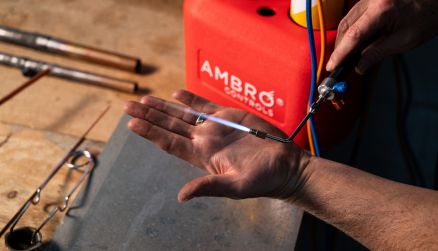
Because aluminum is more sensitive to heat than copper, equipment control becomes particularly important. Stable gas delivery, predictable torch performance and consistent flame adjustment help technicians manage temperature more effectively throughout the brazing process.
Good equipment does not eliminate the need for technique, but it can make temperature management easier when working with heat-sensitive materials.
Things to remember
Aluminum melts at approximately 1220°F (660°C), making it far more sensitive to heat than copper.
That narrower working temperature range means technicians need to pay close attention to:
- heat control
- filler metal selection
- flame adjustment
- manufacturer recommendations
With the right approach, aluminum components can be brazed successfully while reducing the risk of overheating, poor filler flow and damaged parts.