When you’re brazing in HVAC or refrigeration work, it is crucial that you have a clear understanding of how different metals respond to heat. Copper and steel behave very differently under a torch, and much of that comes down to their melting points and heat transfer properties.
If you’ve ever found copper slow to heat or steel quick to overheat in one spot, you’ve already seen this in practice.
This article explains the difference in practical terms, and how it affects your technique on site.
What is a melting point?
The melting point is the temperature at which a metal changes from solid to liquid.
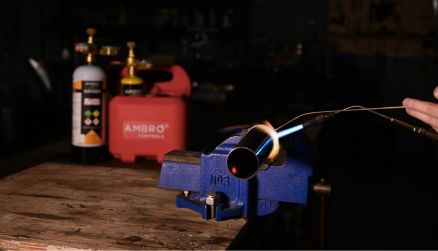
In brazing, the goal is not to melt the base metal. Instead, heat is applied so that a filler metal melts and flows into the joint, creating a strong bond as it cools.
This is a key concept:
- The base metal remains solid
- The filler metal melts and flows
Understanding the melting point of the base material helps technicians apply heat more effectively and avoid damaging components during the process.
Brazing works because the filler metal melts at a lower temperature than the base metal. This allows joints to be formed without altering the structure of the materials being joined.
Melting temperature of copper
Copper has a melting point of approximately 1985°F (1085°C).
One of copper’s most important characteristics is its high thermal conductivity. This means heat spreads quickly through the material rather than staying concentrated in one area.
This is why brazing copper often requires:
- broader heat application
- more movement of the flame
- slightly more time for the joint to reach temperature
What this means on site
Copper absorbs and distributes heat rapidly, which can make brazing feel slower at first. However, it also makes the process more forgiving, as heat is less likely to build up in a single spot.
Technicians often need to heat a wider area around the joint to bring the material up to temperature evenly. Rushing this process can result in poor filler flow or incomplete joints.
Melting temperature of steel
Steel has a higher melting temperature than copper, typically in the range of ~2500 – 2750°F (1370 -1510°C) depending on the alloy.
Steel does not conduct heat as efficiently as copper. Heat tends to remain more localized around the area being heated.
What this means on site
Because heat is retained in a smaller area:
- steel can reach brazing temperature more quickly in one spot
- there is a higher risk of overheating
- oxidation can occur more readily during heating
This means technicians need to apply heat more carefully and maintain better control over the flame. It also makes preparation more important, including the use of appropriate flux to help manage oxidation.
Why copper and steel behave differently during brazing
Copper and steel don’t just have different melting temperatures; they respond differently to heat because of a combination of physical properties.
Thermal conductivity
- Copper spreads heat quickly across the material
- Steel retains heat more locally
Melting temperature
- Steel melts at a higher temperature than copper
- This affects how aggressively heat can be applied
Oxidation behavior
- Steel tends to oxidize more readily during heating
- Flux is typically used to help reduce oxidation and improve joint quality
What this means in practice
The same torch setup can behave very differently depending on the material. Techniques that work well for copper may not translate directly to steel.
Understanding these differences helps technicians adjust their approach and achieve more consistent results across different materials.
Why brazing filler metal matters
Brazing relies on the relationship between the melting temperature of the base metal and the filler metal.
Most brazing filler metals melt in the range of ~1112°F–1652°F (~600°C–900°C), allowing technicians to join materials without melting the base components.
When heat is applied correctly:
- the filler metal melts
- it flows into the joint through capillary action
- it creates a strong, sealed connection as it cools
If the base metal is overheated, the filler may not flow properly, and the quality of the joint can be affected.
Choosing the correct filler metal and applying the right amount of heat are both essential for achieving reliable results.
Common mistakes when working with copper and steel
Even experienced technicians can run into issues when switching between materials.
Some of the most common mistakes include:
- Not preparing the joint properly
Failing to clean or fit the joint correctly before heating
- Using the wrong filler or flux
Especially when working with steel, where oxidation is more likely
- Applying heat too aggressively to steel
Leading to overheating or oxidation in a localized area
- Not allowing enough time for copper to heat evenly
Resulting in poor filler flow
- Inconsistent flame control
Making it harder to maintain the correct temperature at the joint.
These issues are often linked to how heat behaves differently in each material.
Practical tips for brazing copper vs steel
Understanding the theory is useful but applying it on site is what matters.
When working with copper
- Use broader, more even heat movement
- Allow time for heat to spread through the material
- Be mindful of overheating thinner tubing
When working with steel
- Apply heat more precisely to the joint area
- Monitor oxidation and use appropriate flux
- Maintain consistent flame control
- Ensure joints are properly prepared before heating
Adjusting your technique based on the material helps improve joint quality and reduce the need for rework.
Where torch control becomes important
Because copper and steel respond differently to heat, torch control plays a crucial role in achieving consistent results.
Technicians rely on:
- stable flame output
- adjustable heat control
- the ability to fine-tune the flame for different materials
Having control over how heat is applied allows technicians to adapt their approach depending on whether they’re working with copper or steel.
Why melting point matters in practice
Melting point directly affects how materials behave during brazing.
Understanding it helps technicians:
- apply heat more effectively
- avoid overheating
- improve filler flow
- produce stronger joints
It also provides a useful reference point when working with different materials or troubleshooting issues in the field.
Key takeaway
Copper and steel behave differently during brazing because of their melting temperatures and heat transfer properties.
- Copper spreads heat quickly, requiring broader application
- Steel retains heat locally, requiring more precise control
- Oxidation and preparation play a bigger role when working with steel
Understanding these differences helps technicians:
- control heat more effectively
- reduce the risk of overheating or oxidation
- produce stronger, more reliable brazed joints