Gas regulators are one of those pieces of equipment that are often taken for granted…until something goes wrong. They sit between the cylinder and the torch, quietly doing their job but when a regulator starts to fail, it usually happens where it matters most…at the flame.
Understanding how gas regulators work and what causes them to fail makes it easier to spot problems early and keep your setup running just right.
What a gas regulator does
A gas regulator takes the high pressure stored in a gas cylinder and reduces it to a level that can be safely used. Gas cylinders hold gas at pressures higher than needed at the torch. That pressure would be impossible to control and unsafe to use without a regulator.
Regulators allow technicians to:
- reduce pressure to a safe and usable level
- control gas flow
- maintain consistent delivery to the torch
Why this matters
Torch performance depends on the steady supply of gas. If pressure is too high, too low, or inconsistent, it affects how the flame behaves.
In simple terms
The regulator is what turns high-pressure gas into something you can actually work with.
How gas regulators work (simple explanation)
Inside a regulator, a set of internal components works together to control pressure.
Put simply:
- gas enters the regulator from the cylinder at high pressure
- the regulator reduces that pressure to a controlled output
- the technician adjusts the output using the regulator controls
Key components involved
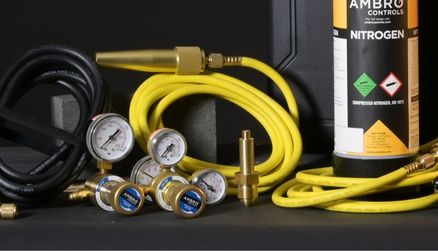
Most torch regulators include:
- Adjustment screw
Used to set the desired working pressure - Pressure gauges
One shows cylinder pressure, the other shows outlet pressure - Internal diaphragm and valve mechanism
These respond to pressure changes and regulate gas flow
What’s happening during use
When you adjust the regulator, you’re changing how much pressure flows through to the torch. The internal diaphragm responds to pressure changes and helps maintain a consistent output as gas is used, constantly adjusting to keep things stable.
Why stable gas pressure matters
When pressure is consistent, everything else is easier to control.
A stable regulator helps produce:
- a steady flame
- predictable heat
- consistent performance at the joint
What happens when pressure isn’t stable
If pressure fluctuates, you may notice:
- the flame changing shape or intensity
- inconsistent heating
- difficulty maintaining the correct flame setting
- inefficient use of fuel
These issues don’t always point directly to the regulator, but they often trace back to how gas is being delivered.
On site
Most technicians rely on feel and experience when working with a torch. When the regulator is doing its job properly, the setup behaves the way you expect it to.
Common reasons gas regulators fail
Regulators don’t generally fail all of a sudden. They degrade over time or are affected due to poor handling and/or storage.
Some of the most common causes include:
Wear and tear
Internal components such as diaphragms and seals can wear out with regular use. Over time, this affects how well the regulator is able to maintain pressure.
Contamination
Dirt, dust or debris entering the regulator can interfere with internal components. Even small amounts can affect performance.
Improper handling
Regulators can be damaged if they’re dropped or handled roughly. Gauges are particularly vulnerable to this.
Incorrect storage
Exposure to moisture, dirt or harsh environments can shorten the life of a regulator.
What this means in practice
Most regulator issues aren’t caused by one single event. They build over time, especially if the equipment isn’t properly taken care of.
Signs a regulator may be failing
Regulator failure isn’t always obvious, often the signs are subtle.
Some common indicators include:
- Inconsistent pressure readings
Gauges that fluctuate or don’t respond as expected - Difficulty maintaining flame stability
The flame won’t stay consistent even with adjustment - Erratic gauge behaviour
Readings that jump, stick, or don’t match what you’re seeing at the torch - Gas flow not adjusting properly
Changes to the regulator don’t produce predictable results
Why this matters
Recognizing signs of failure early can help you deal with the issue before it affects your work or creates a safety risk.
Basic maintenance and care
Like most things, regulators last longer when they’re looked after. Consistent habits are key.
Good practices include:
- Inspect regulators regularly
Look for damage, worn components, or unusual behaviour - Protect gauges and fittings
Especially during transport - Store equipment properly
Keep regulators in clean, dry conditions - Replace worn or damaged components
Don’t wait for complete failure
In practice
A quick check before use and proper storage after the job can go a long way in preventing issues.
Why regulator quality matters
All regulators perform the same basic function, but not all behave the same under real working conditions. When you’re relying on consistent gas delivery, small differences in quality can show up in how the regulator performs.
A reliable regulator helps:
- maintain stable pressure
- deliver consistent gas flow
- reduce the likelihood of unexpected issues
- This becomes more noticeable when working on jobs where:
- precision matters
- conditions aren’t ideal
- you need predictable performance
What this comes down to
When the regulator is working properly, it fades into the background. When it isn’t, it becomes the problem you’re trying to solve.
Key takeaway
Gas regulators control the pressure and flow of gas from the cylinder to the torch.
- They reduce high cylinder pressure to a usable level
- They help maintain stable flame performance
- They play a key role in safe and consistent operation
Understanding how regulators work and recognizing early signs of failure helps technicians avoid problems on site and keep their equipment performing reliably.